
Curriculum
The Reading Room Initial Assessment
The Reading Room tutoring service Plantation Florida uses an “Initial Assessment”, an introductory 1-hour long in person session, to determine a student’s current strengths and areas for growth. We can also give an online assessment if a student prefers to take a test at their own pace on the computer. A number of assessment techniques are used during this first session. Sources for these techniques can be found in the CORE Literacy Library (Diamond & Thorsnes, 2018) the Qualitative Reading Inventory (Leslie & Caldwell, 2017) and Words Their Way (Bear, Templeton, & Johnston, 2004).
These assessments enable us to determine a student’s reading level, decoding/encoding abilities, fluency levels, and comprehension abilities. A separate phonological awareness test can be administered, if a student shows an extreme discrepancy between ability and age. Additionally, a writing sample is taken to observe a child’s skills with letter, sentence, and paragraph formation. These assessments help us to design an individualized plan of improvement for each child. No one plan looks the same for each student as all students are different but you can be assured that the plan will be tailored to the student’s needs. Additionally, some parents just want help in a particular subject to bring up a child’s grade and we can do that too. This individualized attention is what makes The Reading Room the best tutoring service Plantation Florida has to offer!! Two of our popular curriculum plans are listed below, one for elementary aged children and the other for dyslexic readers.
Elementary Tutoring Module
This curriculum consists of weekly tutoring sessions lasting one hour each. At the end of a tutoring module, a book will be created by the student on a topic of their choice.
The Curriculum Framework
Each of the one-hour tutoring sessions follows a standardized format developed to maximize the learning experience. A session consists of various reading and learning activities as described here.
The First 10 Minutes – Fluency Activity
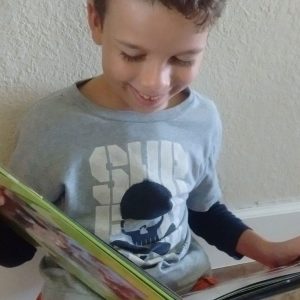 A tutoring session will open with a 10-minute fluency activity. This is a preliminary test to gauge the student’s current reading level. An appropriate-level short story is selected and the tutor logs how many correct words are read by the student in one minute. This information is then graphed and added to any previously existing test results. This is a motivator for both the student and the parents as they can see the weekly progress in a graphic display.
The Next 20 Minutes – Targeted Reading
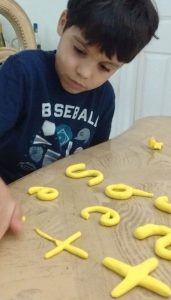
Then there will be a 20-minute targeted reading lesson based on the student’s need in the six big areas of reading. For example, if a student needs help in recognizing the short “e” vowel sound, they would be first introduced to the sound. Then they would practice manipulating alphabet letters to make short “e” words with matching picture cards.
Our tutoring service Plantation Florida uses research to inform our practice as we focus on the “Big 6 of Reading”:
 Oral Language – Learning to communicate orally within the child’s environment.
- Phonological Awareness – “Awareness of the constituent sounds of words in learning to read and spell” (Harris & Hodges, 1995, p. 187). Phonemic awareness is an important subset of phonological awareness.
- Phonics – “A way of teaching reading and spelling that stresses the symbol-sound relationships” (Harris & Hodges, 1995, p. 186).
- Fluency – The ability to read with speed, accuracy, and expression.
- Vocabulary – The words that an individual knows.
- Receptive vocabulary
- Expressive vocabulary
- Comprehension – ‘Comprehension includes understanding what is expressed outright or implied as well as interpreting what is viewed, read, or heard by drawing on one’s knowledge and experiences” (ILA, 2018).
- Reading Comprehension
- Listening Comprehension
The Next 20 Minutes – Shared Reading and Writing Activity
This is followed by a 20-minute shared reading and writing activity. Students choose a book and the tutor and student then either read the book together, echo read it, silently read it, or the tutor would read it aloud to the student. Next, the student would be asked to form a written response to what they have just read. This could include writing a letter to a character in the story, formulating questions and answers about the story, or making a summary of the story. Homework help can replace the shared reading and writing activity if homework has been previously assigned. Our tutoring service Plantation Florida tries to help both the parents and students out!

The Final 10 Minutes – Student Updates Parents
The final 10 minutes of each session will have the student telling their parents about what they have learned that day. Homework activities to reinforce what the student has learned can be given if recommended by the tutor or requested by the parents. Students will be informally reassessed each week to determine the next session’s goals. Letting parents and students know where their kids stand is a hallmark of our tutoring service Plantation Florida.

The Student Book
Once the 10-week tutoring module has been completed, the student will then create a small book (or essay) on a topic of their choice. This video is an example of one student’s completed book. Making a student authored book is what makes our tutoring service Plantation Florida unique.
Structured Literacy Lesson for Dyslexic Readers
Our tutoring service Plantation Florida uses the best research proven methods to help our struggling readers. These lessons are based on the University of Florida Literacy Institute’s Dyslexia program. There are 9 steps in the lesson:
- Visual Drill – Students view a card with a phonics pattern on it. Then the student will verbally recite the sound of the phonics pattern. If it is not known, students will be told the correct sound and asked to repeat it.
- Auditory Drill – The students write the sound they hear in sand. This usually involves the students writing multiple ways to represent one sound. Phonics patterns missed in the visual drill will be presented here as well.
- Blending Drill – Students move magnetic letters to make specific words. These words usually involve a phonics pattern the student is having difficulty mastering. For example, the words may be all igh words such as high, nigh, night, might, fight, sight, light, lighted, and lightheaded. Nonsense and real words will be used in this part of the lesson to see if the students can recognize the phonic pattern in words they have never seen before.
- Review – Material learned in the previous lesson will be reviewed here.
- Regular Words – Students will write phonetically regular spelled words here. They use pound and sound to uncover how to spell these words.
- Heart Words – Students will memorize words that are not regularly spelled.
- Sentences – Students will write sentences that the teachers dictates.
- New Lesson – A new lesson will be presented that both students need.
- Reading – Students will read a text that contains the phonics pattern that was introduced in the new lesson. Comprehension and fluency will also be addressed here while using the text.